 Youngest cooks
Guides
Language
EnglishCurrency
US dollar · $GetYourGuide shows prices in the currency you choose.
Guide · With children
Family Thai cooking class in Chiang Mai: who cooks, who watches
Every school has its own rule for children: some let them cook from about 9, others only from 10, and younger ones come as visitors. Here is how the classes compare for families.
Check availabilityfrom $28 · cancel without a fee
Editorial team, chiang-mai-food-tour.comUpdated October 26, 2026Reading time 6 min3 sources
Quick answer for parents
- 01Youngest cooks
- From age 9 at the organic farm class, with their own station.
- 02Under 10 elsewhere
- Several schools treat children under 10 as visitors who do not cook.
- 03Toddlers
- Free at the farm class up to age 3.
- 04Strollers
- The evening class is wheelchair and stroller accessible.
- 05Best season
- November to February, when TAT says the city cools down.1
Why cooking works as a family day out
A family Thai cooking class in Chiang Mai is one of the few activities that keeps every age busy at once. Younger children can wash herbs and stir, older ones can pound paste and handle a wok with help, and everyone ends the day by eating what they made. There is no long walk, no queue and no museum silence to keep.
It also teaches children to eat. A child who has smelled lemongrass in a garden and pounded it in a mortar is far more willing to try the curry it goes into. The market stop shows them fruit and vegetables they have never seen, and the cooking makes the food their own. Back home, the recipe becomes a family project rather than a takeaway order.
The catch is that every school has its own rules on age, price and who may cook. Those rules decide which class suits your family far more than the menu does; read them before you fall for a garden or a lake view.
A family farm day
How the recommended class runs with children
-
Morning
Hotel pickup
An air-conditioned vehicle collects the family in the city.
-
On the way
Market stop
A brief visit to a local market.
-
At the farm
Garden walk
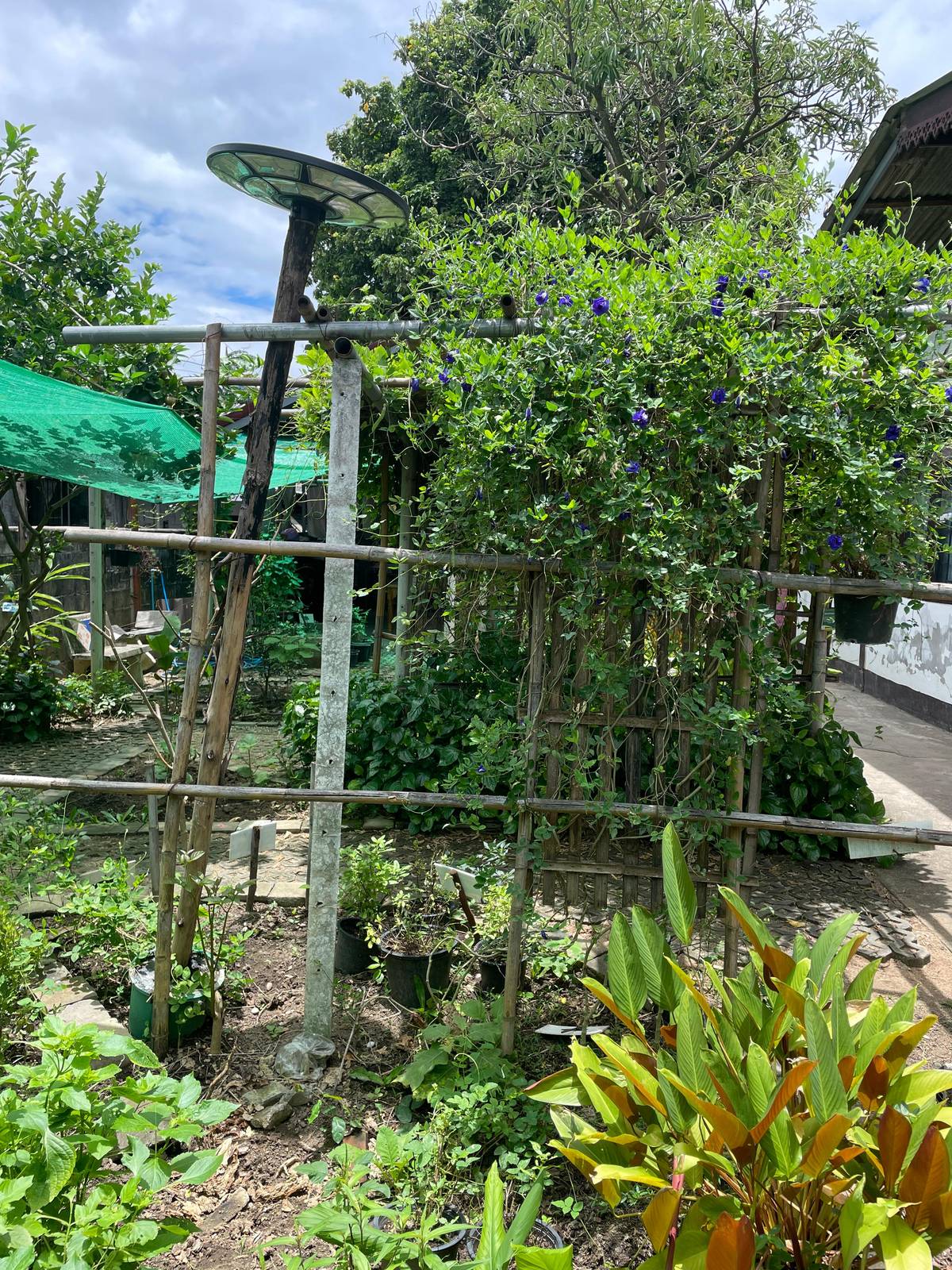
Herbs and vegetables in the organic kitchen garden.
-
Cooking
Own stations
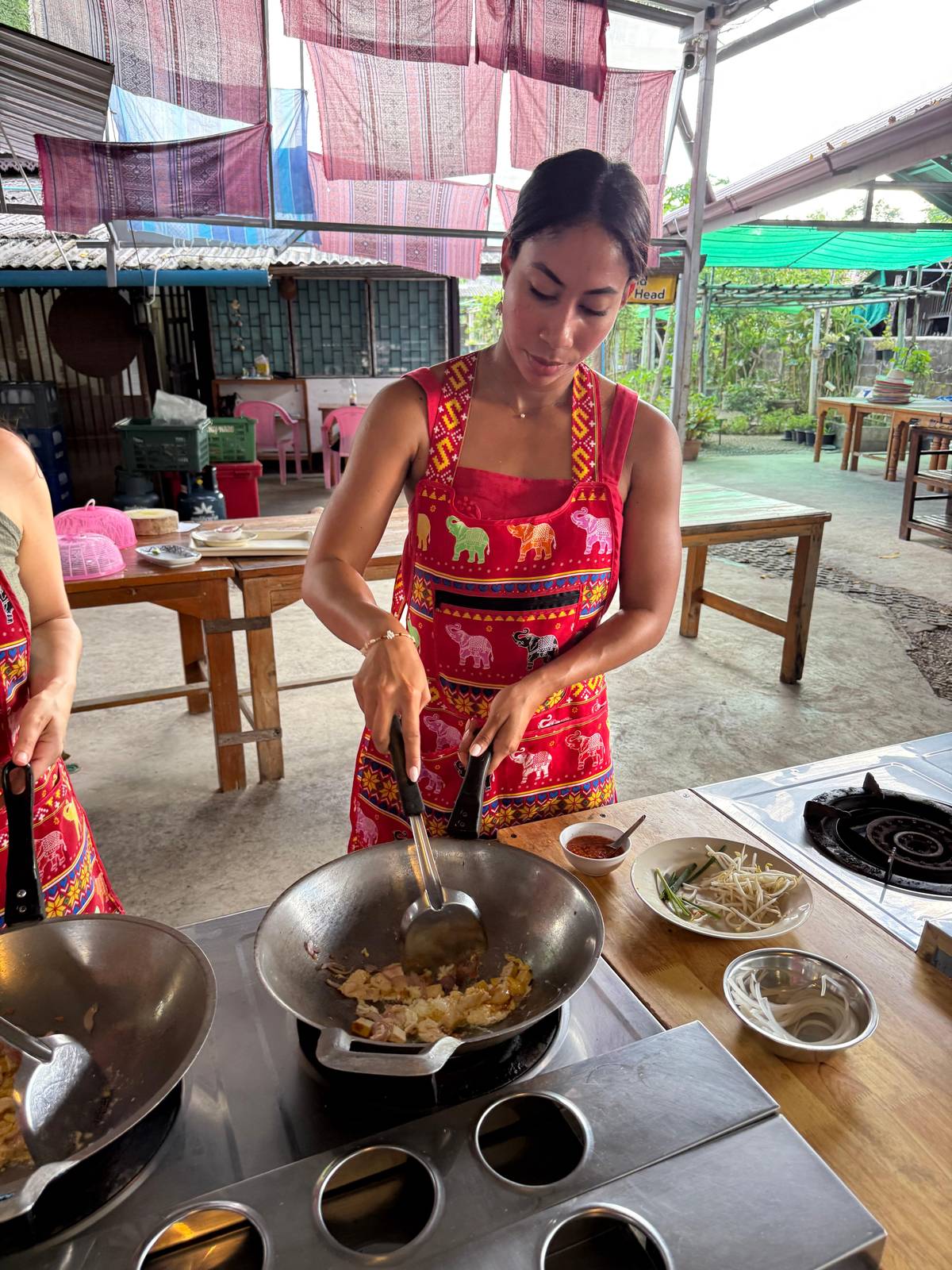
Children above 9 cook at their own station; younger ones watch as visitors.
-
Lunch
Eat together
The family eats what it cooked, then rides back to the hotel.
The age rules, school by school
The organic farm class this page recommends is the most generous to young cooks. Its adult price covers participants aged 9 to 75, children above 9 get their own cooking station, children aged 4 to 8 pay a visitor's price and those up to 3 come free. It runs 6 hours with hotel pickup, from $28.
Other schools draw the line at 10. One farm class treats children under 10 as visitors without their own station, though they can cook alongside a parent; book them at the adult price and they get a station. Another farm class takes children under 10 along for the transport and the meal, but they do not cook.
The lake class lets under-threes join free and treats children from 4 to 9 as visitors who do not cook. The Thai and Akha school sells a single price band for ages 6 to 99, and says strollers are welcome. Ask the school what a 6-year-old actually does before you book.
Reviews
Classes with stated child rules, by number of ratings
ratings
Age rules
How each class treats children
| Class | Children cook from | Younger children | Price |
|---|---|---|---|
| Organic farm, 5 courses | Age 9 | 4 to 8 visitors, 0 to 3 free | from $28 |
| Farm & market visit | Age 10, or adult price | Cook with a parent | from $34 |
| Organic farm, small group | Age 10 | Visitors, no cooking | from $30 |
| Lake class & market | Age 10 | 4 to 9 visitors, under 3 free | from $29 |
| Thai & Akha dishes | Price band from 6 | Strollers welcome | from $42 |
| Evening class & market | Not stated | Observers pay a fee | from $30 |
Each row restates the child and visitor rules of its own listing; prices are starting prices per student.
Three family classes
Young cooks on a farm, chickens to feed, or a lake
Youngest cooks Cook with a parent
 Under 3 free
Decision helper
Which class fits your family?
Start from the age of your youngest cook.
The organic farm class
Children above 9 get their own station.
The farm and market class
Under-tens can cook alongside a parent.
The evening class
Wheelchair and stroller accessible, infant seats on pickup.
The lake class
Lake time after a day session; under-threes free.
Thai and Akha
Akha dishes, and strollers welcome.
When the weather in Chiang Mai cools down from November to February, the city takes on a different feel, with crisp air making outdoor activities more comfortable
Visitors, onlookers and what they pay
If one parent wants to cook and the other wants to watch with a toddler, look at how visitors are priced. At the organic farm class, the child band of 4 to 8 is the visitor's price. At the smaller farm class, the child price is for a visitor who does not cook, with one visitor allowed per student. Write the ages of every family member in the booking notes, and the school can tell you exactly who cooks and who watches.
The evening class asks observers to pay a fee as well. None of this is a trick: at one farm class, children who come along get the transport and a meal. But it means a family with young children can pay for every seat while only the parents cook.
Add it up before you choose. A class that lets a 9-year-old cook at an adult price may give better value than one that charges a visitor's fee for a child who only watches.
Checklist
Packing for a family class
01
Bring
- Water bottles for everyone
- Sun hats for the garden walk
- Closed shoes near the woks
- A change of clothes for small cooks
02
Ask when booking
- Which ages cook at their own station
- How visitors and toddlers are priced
- Car seats on the transfer
- Paths and access for strollers
Price check
What your family pays
Choose a class and the number of students; visitors are priced separately.
People
Total from$55
per guest from $28
Check availabilityfree cancellationEach line takes the listing's lowest per-guest starting price on Viator or GetYourGuide, times the guests you enter, converted at the European Central Bank rate; the seller's checkout gives the exact sum.
Video
A family cooks Thai food together
The video loads only when you tap play.
A Thai cooking class for kids: what children enjoy
A Thai cooking class for kids works best when the child has a job. Pounding curry paste in a stone mortar is often the highlight: it is loud, it takes effort and the smell changes as you go. Rolling spring rolls is another winner, and so is the moment the wok flares at a teacher's station.
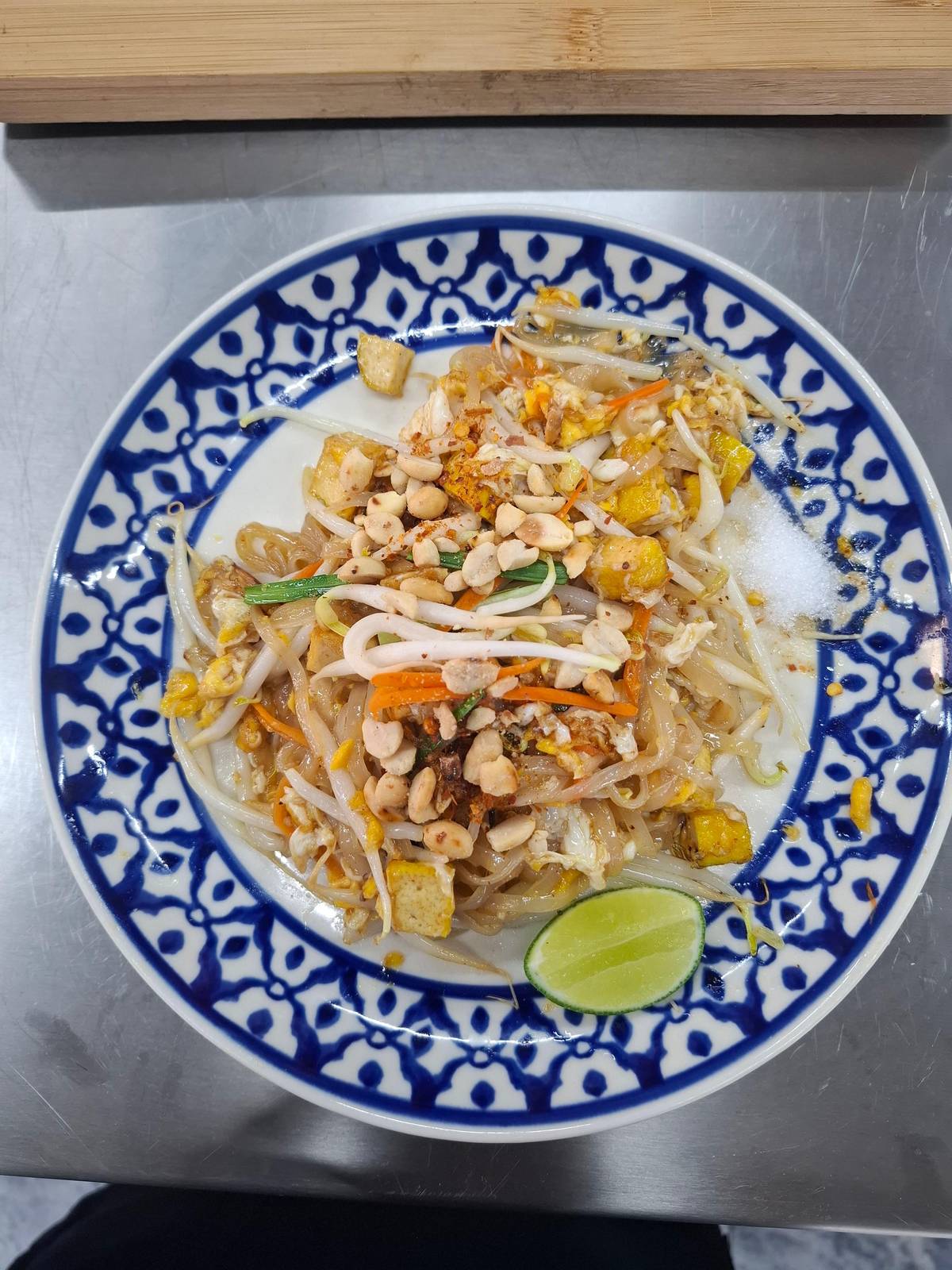
At the organic farm class, each guest picks one dish in each of 5 categories, from curry paste to spring rolls, and every dish can be made mild. Choosing their own menu gives children ownership, and mild versions of pad thai, spring rolls and a coconut soup are safe bets for cautious eaters.
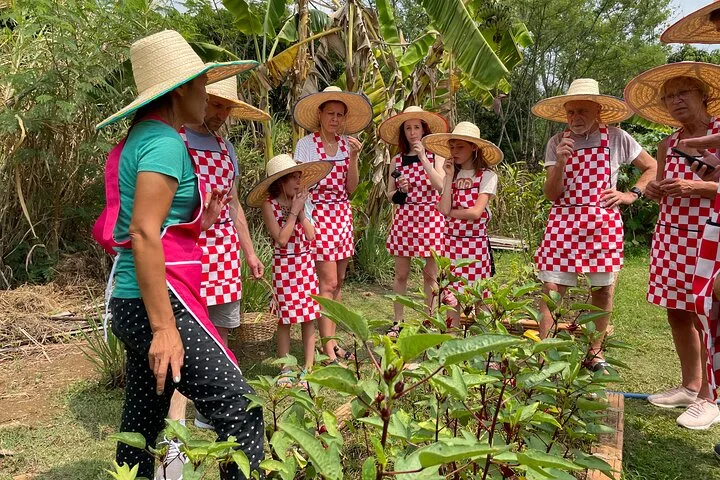
Farm classes add animals and plants. At one farm, guests can feed the chickens. A garden walk at the recommended farm teaches herbs by smell and touch before anyone picks up a knife. Give each child a small task in the garden, like finding the basil or smelling the kaffir lime leaves, and they will follow the rest of the lesson.
Strollers, wheelchairs and toddlers
Access varies more than parents expect. The evening class says it is wheelchair and stroller accessible and offers infant seats on its pickup. The Thai and Akha school is wheelchair accessible and welcomes strollers.
A farm class often means uneven paths, an open kitchen and a longer drive. The recommended farm sits 45 minutes from the old city near San Kamphaeng Hot Springs, a long transfer for a baby. Ask the school about car seats for toddlers when you book.
If your youngest is still in a stroller, an evening town class with a short transfer may be the calmer choice. Older children who can walk and sit through a few hours are ready for a farm day, especially if there are chickens to feed. Whatever you choose, pack snacks: lunch comes only after the cooking, and hungry children make slow students.
Heat, timing and the length of the day
Children feel the heat first. In April the average daytime high in Chiang Mai climbs to 36.7 °C, and an open-air kitchen next to a hot wok can be tough at midday.2 TAT says the city cools down from November to February, when outdoor activities are more comfortable.1 In the hot months, a hat and a full water bottle for every child are not optional.
Length matters as much as temperature. Classes here run from 3.5 to 7 hours, the transfer included, and the longest days are at the farms. A farm day suits children who can sit in a car and wait for their turn at the stove; a short town class suits younger ones.
A morning class leaves the afternoon for a nap or the pool. An evening class turns the meal into dinner, which works well for older children and avoids the hottest hours of the day, though it ends later than a young child's bedtime may allow.
After the class: food with children in the city
A cooking class makes the rest of the trip easier at the table. Children who cooked pad thai or a mild coconut soup will recognise those dishes on a menu, and the names give them something to order themselves. Let them try the street version of a dish they cooked and compare notes; it turns a meal into a game.
For eating out, the MICHELIN Guide tags 13 of its Chiang Mai restaurants as family friendly.3 Evening food tours are an option for older children: the street food tour this site books has a child band from 5 to 15, though it is not suitable for infants.
One after-dark food trail is not for children under 8, and one truck tour lets infants ride in a pram with an adult. Read the child rules for every food outing, as carefully as you read them for the class.
Book your evening
Your first night in Chiang Mai, well fed.
Hotel pickup, two or more markets, 8+ dishes, and free cancellation up to a day ahead.


You ask,we answer.
At what age can a child cook in a class here?
From 9 at the organic farm class. Children above 9 get their own station there; several other schools set the line at 10.
Do toddlers pay?
Usually not. The farm class lets children up to 3 join free, and the lake class lets under-threes join free.
Can a younger child cook with a parent?
At one farm class, yes. Children under 10 there can join the cooking with a parent without their own station.
Which class suits a stroller?
The evening class. It says it is wheelchair and stroller accessible, with infant seats on the pickup.
Do non-cooking family members pay?
Often, as visitors. Several schools charge a visitor's price for anyone who watches rather than cooks.
Can the food be made mild for children?
Yes. At the organic farm class you decide whether each dish is spicy or mild.
When is the best time of year with kids?
The cool season. TAT says Chiang Mai cools down from November to February.1
Sources
Sources and evidence
- 1Tourism Authority of ThailandA survivor’s guide to winter in Northern Thailand (TAT Newsroom)↩
- 2World Meteorological Organization (WMO Climate Normals 1991-2020, archived by the US National Centers for Environmental Information)Chiang Mai, WMO 48327: climate normals 1991-2020↩
- 3MICHELIN GuideChiang Mai restaurants - the MICHELIN Guide↩
Keep reading